Choosing among China’s top PVC powder manufacturers requires more than comparing price lists. A reliable supplier should demonstrate consistent resin quality, stable production, and clear technical documentation. Buyers should examine K-value, particle size, bulk density, whiteness, residual monomer data, and processing performance. These details affect pipe strength, window profiles, cable insulation, and flooring durability.
George Wypych, author of the PVC Handbook, emphasizes, “PVC performance depends on both the resin and the formulation.” This principle matters when evaluating a pvc powder manufacturer. A polished product sample may look excellent, yet its performance can change during extrusion or injection molding. Ask for recent test reports, batch records, safety data sheets, and certificates from recognized laboratories. Request samples from different production batches. Compare them under identical processing conditions.
Factory visits can reveal practical differences. Look at material storage, dust control, laboratory equipment, and packaging quality. A dependable manufacturer should explain how it manages moisture, contamination, and batch variation. Communication matters too. Technical replies should be specific, not vague promises.
No supplier is perfect. Even experienced buyers can overvalue low prices or attractive brochures. That is a weakness worth admitting. A stronger decision combines laboratory evidence, production experience, customer references, and after-sales support. Check whether the manufacturer understands your application, not merely your requested grade. The best choice may not be the cheapest quote. It is the supplier that delivers predictable pvc powder quality, honest documentation, and practical support over time.
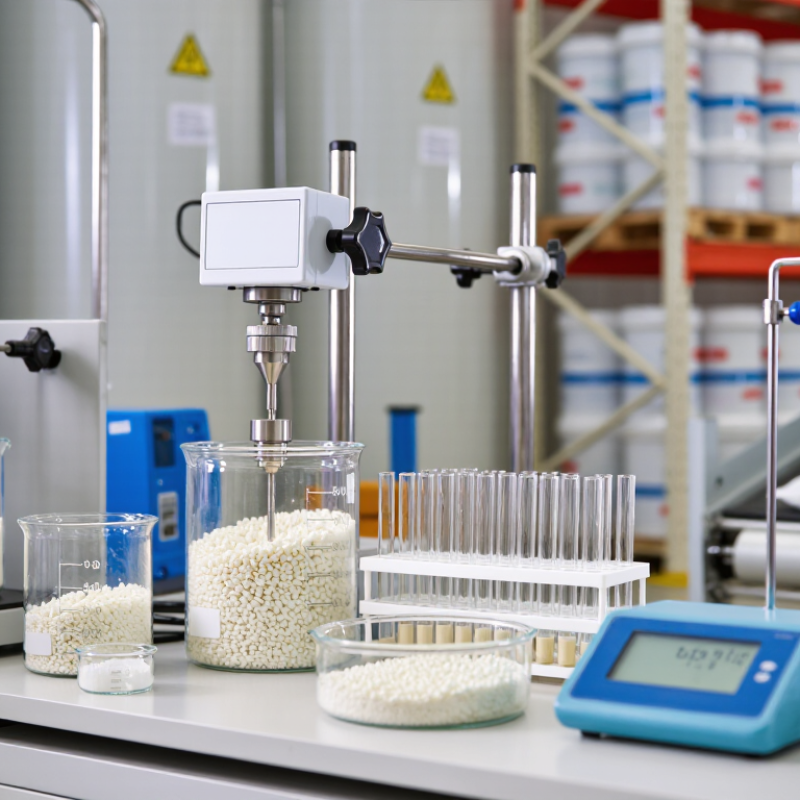
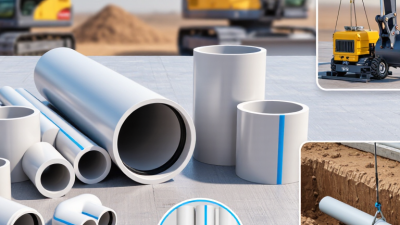
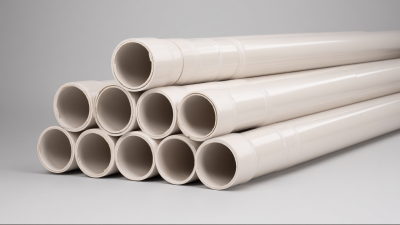
PVC powder is a white thermoplastic resin made from polyvinyl chloride. It is not usually a finished product. Manufacturers blend it with stabilizers, plasticizers, pigments, and other additives before processing. The final material may become pipe, flooring, window profiles, cable insulation, or flexible film. Particle size, purity, moisture, and thermal stability affect how smoothly the powder performs during mixing and extrusion.
Manufacturer selection matters because small variations can create visible production problems. Poor consistency may cause uneven color, weak surfaces, difficult extrusion, or higher scrap rates. In plant evaluations, a reliable supplier usually provides a clear technical data sheet, batch certificate, safety information, and traceable production records. Ask for recent samples, not only polished marketing descriptions. Test melt behavior, whiteness, residue, and stability under your actual processing conditions. A low price is not always a saving.
Tips: Check whether testing methods are clearly stated. Compare several batches, inspect packaging, and ask how complaints are handled. Confirm production capacity before signing a long-term agreement. A factory visit can reveal storage conditions, cleanliness, and quality-control routines. However, one visit does not prove everything. I have seen attractive samples perform differently later. Independent testing remains worthwhile, especially when your product requires steady dimensions or strict compliance.eriya
China Top PVC Powder Manufacturers: How to Choose?
High-quality PVC powder is defined by consistent technical data, not a polished sales sheet. Start with K-value, which indicates molecular weight and strongly affects melt strength, processing temperature, and final durability. The correct range depends on pipes, profiles, cables, or films. Particle-size distribution also matters. Uniform particles feed more steadily and reduce dust, lumps, and uneven plasticization.
Moisture, bulk density, and apparent porosity should be checked against the agreed product specification. Excess moisture can cause processing defects and unstable extrusion. Residual vinyl chloride monomer requires strict control and validated laboratory testing. Whiteness, thermal stability, and impurity levels provide additional evidence of production discipline. Relevant ISO, ASTM, or national methods should appear on the certificate of analysis, with clear sampling dates and test conditions. Numbers without methods are weak evidence.
A reliable manufacturer should provide batch traceability, retained samples, and test results that match independent verification. During a factory evaluation, ask for particle-size curves rather than one average value. Request processing trials using your actual equipment and additives. The powder may look excellent but behave poorly under real shear and heat. That happens.
One overlooked detail is consistency between batches. A slightly lower headline value may be safer than large variation. Specifications should be reviewed with an experienced polymer technician before purchase. No single standard proves quality. Application performance must confirm the paperwork.
Choosing a China PVC powder manufacturer requires more than comparing price lists. Start by checking the producer’s technical experience, production capacity, and export history. Ask for recent certificates, safety data sheets, and batch-specific certificates of analysis. Review key indicators, including K-value, particle-size distribution, whiteness, moisture, and residual vinyl chloride content. These details affect processing stability, surface quality, and worker safety.
Tips: Request samples from three separate batches. Test them under your actual mixing and extrusion conditions. Record melt behavior, dispersion, and final product appearance. Confirm whether the supplier can maintain the same specifications during peak seasons. A clean factory tour is useful, but it does not prove consistent quality. Inspect calibration records, raw-material storage, laboratory equipment, and quality-control procedures. Ask how rejected batches are isolated and documented.
Communication also deserves a step-by-step review. Send a clear specification sheet with packaging, loading, delivery, and inspection requirements. Evaluate how quickly the manufacturer answers technical questions. Reliable suppliers explain limitations instead of promising everything. Check production lead times using written records, not only sales statements. Discuss pre-shipment inspection and an agreed response process for quality disputes. No evaluation is perfect. Small gaps in documentation may become expensive after arrival, so keep reviewing evidence before approving regular orders.
| Step | Evaluation Dimension | Key Data or Requirement | How to Verify | Weight | Suggested Score | Decision Signal |
|---|---|---|---|---|---|---|
| 1 | Define the PVC Grade | Confirm whether the material is suspension PVC resin, paste PVC, or another grade. Specify the intended process, such as pipe extrusion, profile extrusion, cable insulation, film, flooring, or injection molding. | Compare the supplier’s technical data sheet with the customer’s formulation and processing requirements. | 10% | 0–10 | No clear grade or application match is a major risk. |
| 2 | Check Technical Specifications | Review K-value or viscosity grade, apparent bulk density, particle-size distribution, residual VCM, volatile matter, whiteness, and impurity or fish-eye limits. K-value is commonly used to indicate PVC molecular-weight grade. | Request a current technical data sheet, certificate of analysis, test methods, and lot-specific results. Check whether units and test conditions are stated. | 20% | 0–20 | Missing test methods or inconsistent specifications should reduce the score. |
| 3 | Verify Applicable Standards | Check conformity with the standards relevant to the product and destination market. Common references include ASTM, ISO, EN, GB/T, REACH, RoHS, and applicable food-contact or drinking-water requirements. | Ask for valid declarations, laboratory reports, safety data sheets, and regulatory documentation. Confirm that the documents apply to the exact PVC grade supplied. | 15% | 0–15 | Generic or expired documents are not sufficient evidence. |
| 4 | Evaluate Quality-Control Capability | Assess incoming-material control, production-process control, laboratory equipment, sampling procedures, batch traceability, nonconforming-product handling, and retained-sample management. | Review audit records, quality procedures, calibration certificates, sample reports, and corrective-action records. A remote or on-site audit is preferable for large orders. | 15% | 0–15 | Traceability should extend from raw material to finished batch. |
| 5 | Test Samples in Your Formulation | Compare fusion behavior, torque or processing stability, dispersion, color, surface appearance, mechanical properties, and output rate under the same formulation and equipment conditions. | Conduct laboratory and pilot trials using at least two or three representative production batches. Keep formulation, equipment, temperature, and test speed consistent. | 20% | 0–20 | Production trial results are more useful than price comparisons alone. |
| 6 | Check Supply Stability | Evaluate monthly capacity, normal lead time, minimum order quantity, safety-stock options, production scheduling, export experience, and contingency planning for raw-material or logistics disruptions. | Request a written supply plan, historical delivery performance, standard packaging details, and a clear escalation process for delays. | 10% | 0–10 | A low price is not advantageous if deliveries are unreliable. |
| 7 | Review Packaging and Logistics | Confirm packaging type, net weight, moisture protection, palletization, container loading, labeling, storage conditions, and transport documentation. PVC powder should be protected from contamination and moisture. | Inspect packaging samples, shipping marks, SDS documentation, loading photographs, and arrival-condition records from trial shipments. | 5% | 0–5 | Damaged or poorly sealed bags can create quality and handling problems. |
| 8 | Calculate Total Delivered Cost | Compare material price, packaging, inland transport, freight, insurance, duties, inspection, payment fees, inventory cost, waste, and formulation-adjustment cost. | Use the same Incoterm, shipment size, destination, currency, payment terms, and validity period for all quotations. | 5% | 0–5 | Evaluate cost per accepted finished product, not only cost per ton. |
| 9 | Assess Communication and Technical Support | Consider response speed, clarity of technical answers, complaint handling, change-notification procedures, sample availability, and ability to support formulation or processing trials. | Use a written question list and record response time, document quality, trial support, and corrective-action effectiveness. | 5% | 0–5 | Clear technical communication lowers qualification and production risks. |
| Total Evaluation Score | 100% | 0–100 | Use the thresholds below. | |||
| Recommended Interpretation: 85–100 = preferred for qualification; 70–84 = acceptable with a corrective-action plan; 55–69 = requires additional testing and risk controls; below 55 = generally unsuitable for regular supply. Any failure involving regulatory compliance, abnormal safety documentation, unverifiable test data, or repeated batch inconsistency should be treated as a critical disqualifier regardless of the total score. | ||||||
A reliable PVC powder supplier should explain its production process clearly. Ask whether the material uses suspension or emulsion polymerization. Check the resin’s K-value, bulk density, particle-size distribution, and plasticizer absorption. These figures affect extrusion, molding, and final product stability. Request batch records, not only a general product brochure. Factory visitors should inspect raw-material storage, reactor controls, drying systems, and packaging areas. Clean floors help, but process discipline matters more.
Testing details deserve close attention. Ask for moisture, sieve residue, whiteness, apparent density, and residual vinyl chloride results. The certificate of analysis should show batch numbers, test dates, methods, and acceptance limits. Independent laboratories with ISO/IEC 17025 competence can provide useful verification. Also check whether instruments are calibrated and whether samples are retained. A low moisture result means little if sampling is careless. Small details matter.
Certification must match the destination market and product application. Review quality, environmental, and occupational management certificates, then verify their validity with the issuing body. Do not accept a certificate as proof of every shipment. Production capacity should be supported by equipment records, delivery history, and traceability procedures. Ask how complaints are investigated and how rejected batches are controlled. Some suppliers may answer slowly. That is not automatically disqualifying, but unclear records deserve a second look. No checklist is perfect.
China Top PVC Powder Manufacturers: How to Choose?
Price comparison should begin with the delivered cost, not the quoted factory price. Add freight, insurance, inspection, financing, and possible port storage fees. Argus PVC assessments show that regional PVC prices can change quickly with feedstock, electricity, and freight movements. Request the quotation basis, validity period, packaging cost, and adjustment formula. A low quote can still be wrong.
Supply capacity requires evidence. China Chlor-Alkali Industry Association statistics reported China’s PVC production at more than 20 million tonnes in recent years. However, installed capacity does not equal available supply. Ask for monthly production records, export experience, warehouse locations, and planned maintenance dates. A practical test is a small trial order. Check whether the supplier ships the agreed grade and quantity on schedule. Do not rely only on a polished capacity certificate.
After-sales support should be measurable. Require a technical data sheet, certificate of analysis, safety data sheet, batch traceability, and written complaint procedures. The Grand View Research PVC market report projects continued global growth through 2030, but market expansion does not guarantee service quality. Confirm response times for quality claims, replacement rules, and technical guidance for processing problems. In real procurement reviews, buyers sometimes ignore these details. That is a costly weakness. A supplier answering within one day is useful; a supplier closing a verified claim within a defined period is more reliable.