Your Compounder of Choice

Mon - Fri: 8:00 - 16:30 | Sat & Sun: Closed

How to Choose the Right Rigid PVC Pipe?

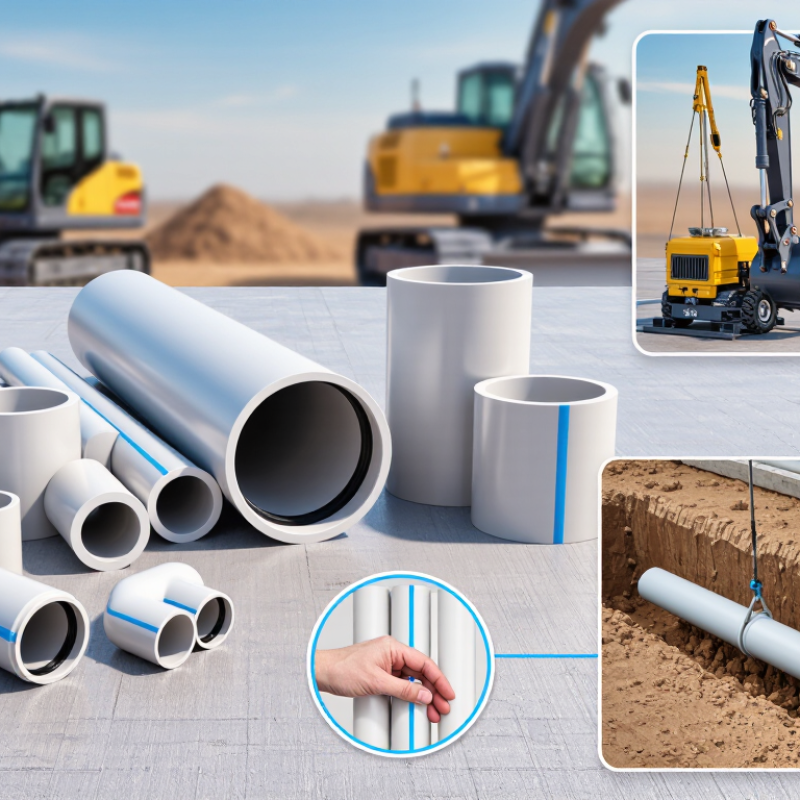
Choosing the right rigid pvc pipe is not a simple matter of comparing price, diameter, and wall thickness. The correct decision depends on pressure, temperature, soil conditions, chemical exposure, installation depth, and expected service life. A pipe that performs well beneath a residential garden may fail under industrial loading. Small details matter, including joint design, bedding quality, and sunlight exposure during storage.

Market data shows why careful selection deserves attention. Fortune Business Insights valued the global PVC pipes market at approximately USD 22.78 billion in 2023 and projected continued growth through 2032. Grand View Research also identifies construction, water supply, and wastewater infrastructure as major demand sectors. These reports describe market direction, not a specification for your project. That distinction is easy to miss.

Dr. Steven Folkman, a civil engineering professor at Utah State University, reported that “PVC water and sewer pipe has an expected service life of 100 years or more.” His finding supports PVC’s long-term potential, but it does not make every product suitable for every application. Installation quality still decides much of the outcome. Poorly compacted soil can create uneven stress. Excessive heat can reduce pressure performance. Chemical compatibility must be checked, not assumed.

This guide examines how to choose a rigid pvc pipe using measurable criteria, recognized standards, and practical job-site considerations. It will compare pressure classes, SDR ratings, connection methods, and environmental limitations. The process is technical. It is also imperfect. Product labels can appear clear while hiding important differences. A reliable choice begins with the actual service conditions, not a convenient guess.
How to Choose the Right Rigid PVC Pipe?

What Is Rigid PVC Pipe and Where Is It Used?

Rigid PVC pipe is an unplasticized plastic pipe that keeps a firm shape during normal service. Unlike flexible PVC, it does not bend easily by hand. Its smooth inner surface supports efficient water flow and reduces places where deposits can collect. It also resists corrosion, moisture, and many common chemicals.

That does not make it universal.

Rigid PVC is widely used for cold-water supply, drainage, vent lines, and electrical conduit. Larger sections may serve buried water or sewer networks. Farms often use it for irrigation because it is lightweight and easy to handle. For drinking water, choose pipe certified for potable service and follow local installation requirements. Drainage pipe also has different pressure expectations from pressurized supply pipe. This distinction is often missed.

Choosing the correct pipe starts with the application, not diameter alone. Check nominal size, wall thickness, pressure rating, temperature limits, and joint method. Solvent-welded joints can provide a dependable seal when surfaces are clean and properly prepared. Buried pipe needs suitable bedding and protection from rocks or shifting soil. Freezing conditions and strong sunlight can make rigid PVC brittle over time. I have seen simple sizing assumptions cause noisy flow, leaks, and difficult repairs. The material is forgiving, but poor installation is not. When conditions remain uncertain, consult a qualified engineer or local code authority.

How to Choose the Right Rigid PVC Pipe?

Rigid PVC pipe is a strong, lightweight thermoplastic pipe used for cold-water distribution, drainage, sewer systems, conduit, irrigation, and chemical handling. The chart shows standard outside diameters for common nominal pipe sizes. Select the pipe by considering nominal size, pressure rating, wall thickness, temperature, chemical compatibility, and local installation codes.

Outside-diameter values are common inch-based dimensions used for rigid PVC pressure pipe and are shown for size comparison. Actual wall thickness and pressure capacity vary by schedule, pipe series, and applicable standard.

Which Rigid PVC Pipe Specifications Match Your Project?

Choosing the right rigid PVC pipe starts with matching specifications to the project, not simply selecting the largest size. Measure the required flow, pressure, temperature, and installation length. Then compare outside diameter, wall thickness, pressure rating, and connection method. A pipe with a larger diameter may reduce friction, but it can also increase material and support costs.

For water distribution, check the pipe’s pressure class at the expected operating temperature. Rigid PVC usually performs well in moderate-temperature systems, but its pressure capacity can decrease as temperatures rise. Confirm the required dimensions against recognized standards and the project drawings. For drainage, gravity flow and slope often matter more than pressure rating. For chemical service, verify compatibility with the exact liquid, concentration, and exposure time. Do not rely on a general “chemical-resistant” statement.

On site, I have seen failures caused by small details: poor support spacing, forced alignment, or an incorrect solvent connection. Check the manufacturer’s technical data, but also ask whether the conditions match your application. UV exposure, soil movement, impact, and freeze-thaw cycles may require additional protection. A specification that looks suitable on paper can still be wrong in the field. Rechecking the calculations feels slow, yet it is often cheaper than replacing a buried line. Include inspection access where possible, especially for systems that will be difficult to repair later.

How to Compare Pressure Ratings, Sizes, and Wall Thicknesses

Choosing the right rigid PVC pipe starts with comparing pressure ratings, dimensions, and wall thickness together. A larger number is not always better.

AWWA C900-22 lists common PVC pressure classes, including 235 psi for DR18 and 165 psi for DR25 at approximately 73°F. DR18 uses a thicker wall than DR25, so it generally tolerates greater internal pressure. However, temperature, surge pressure, installation quality, and chemical exposure can reduce real-world performance. Temperature changes everything. Do not select a pipe from working pressure alone.

Size labels can also mislead. A nominal 6-inch pipe may have an outside diameter near 6.90 inches, depending on the applicable standard. Under the Uni-Bell PVC Pipe Association’s design handbook, dimension ratio follows the formula DR = outside diameter ÷ wall thickness. Therefore, a 6-inch DR18 pipe has a wall near 0.383 inches, while DR25 is near 0.276 inches. The thinner wall may provide more internal flow area, but it leaves less tolerance for pressure surges or handling damage. Compare inside diameter, not just the printed size. ASTM D2241 and AWWA specifications use different sizing systems, which can create avoidable errors.

Field checks should confirm pressure class, temperature rating, gasket condition, and actual operating pressure. I have found that the most attractive calculation can still fail when surge conditions are ignored. Recheck the assumptions.

What Material and Performance Factors Should You Evaluate?

How to Choose the Right Rigid PVC Pipe?

Material choice should begin with the fluid, temperature, and operating pressure. Rigid PVC, or PVC-U, resists many acids, salts, and alkalis. However, compatibility tables still matter. Concentration and temperature can change the result. ASTM D1784 lists a 12454 PVC compound with a minimum tensile strength of 48.3 MPa. This figure describes material performance, not a complete pipe rating. Check the applicable product standard, such as ASTM D2241 or ISO 1452.

Pressure capacity depends on wall thickness, outside diameter, and temperature. A lower SDR generally means a thicker wall. AWWA M23 explains that PVC pressure design requires long-term strength, surge pressure, and temperature derating. Thermal movement also deserves attention. PVC-U commonly expands about 5–8 × 10⁻⁵ m/m·°C, according to technical guidance from the Uni-Bell PVC Pipe Association. A 30-metre line can move noticeably under outdoor temperature changes. Poorly placed supports may create stress at joints.

Tips: Request test certificates, pressure ratings, and chemical-resistance data. Inspect sockets for damage and verify gasket seating. I would not trust appearance alone. A pipe can look robust and still be unsuitable for hot service, vacuum conditions, or repeated water hammer. Consider UV exposure, impact risk, burial depth, and installation quality. These practical details often decide whether laboratory performance survives the real job.

How to Select, Inspect, and Install Rigid PVC Pipe Properly

How to Choose the Right Rigid PVC Pipe?

How to Select, Inspect, and Install Rigid PVC Pipe Properly

Selecting rigid PVC pipe starts with the application, not the price. Check the fluid, operating temperature, pressure, and required diameter. Drainage systems need different specifications from pressurized water lines. Confirm the pipe’s pressure rating and wall thickness against the project requirements. Local plumbing and building codes must also guide the choice.

Inspect every length before installation. Look for cracks, crushed ends, deep scratches, discoloration, or chalky surfaces. Sun exposure can weaken stored pipe. Keep it supported on a flat surface, away from sharp debris and excessive heat. Pipe markings should remain readable. If they are unclear, replacing that section is safer than guessing.

During installation, cut the pipe squarely and remove burrs from the edges. Dry-fit each connection before applying approved solvent cement. Clean, dry surfaces matter. Push the pipe fully into the fitting, then hold it briefly without twisting. Poor alignment can create stress that appears months later. Allow the joint to cure according to the cement instructions before testing the system. Test gradually, and inspect for movement or leakage. A small mistake during preparation often causes a large repair later.