Choosing the best China PVC compound supplier requires more than comparing prices or browsing attractive product pages. A reliable partner should understand your application, processing equipment, and performance targets. Cable insulation needs stable electrical properties. Window profiles require weather resistance, color consistency, and controlled impact strength. Medical components demand tighter documentation and cleaner production controls.
Dr. George Wypych, a respected PVC materials author, offers a useful principle: “A PVC compound is only as reliable as its formulation and processing control.” This idea matters when evaluating suppliers. Ask for technical data sheets, safety documents, batch records, and recent test results. Examine how the supplier controls plasticizer content, filler dispersion, melt flow, hardness, and thermal stability. Request production samples, not only laboratory samples. A small difference in fusion behavior can create surface defects, brittle edges, or unstable extrusion.
The best China PVC compound supplier is usually the one that communicates clearly and proves consistency over time. Look for modern compounding lines, calibrated testing equipment, trained technicians, and traceable raw materials. Certifications can support trust, but they cannot replace independent testing or factory verification. That is an uncomfortable point.
Low prices may look efficient. They may also hide formulation changes or weak quality control. No supplier is perfect, and no compound suits every application. Buyers should compare trial batches under real production conditions, including heat, pressure, color, and storage time. A careful supplier will welcome technical questions and discuss improvements honestly. That practical response often reveals more than a polished brochure.
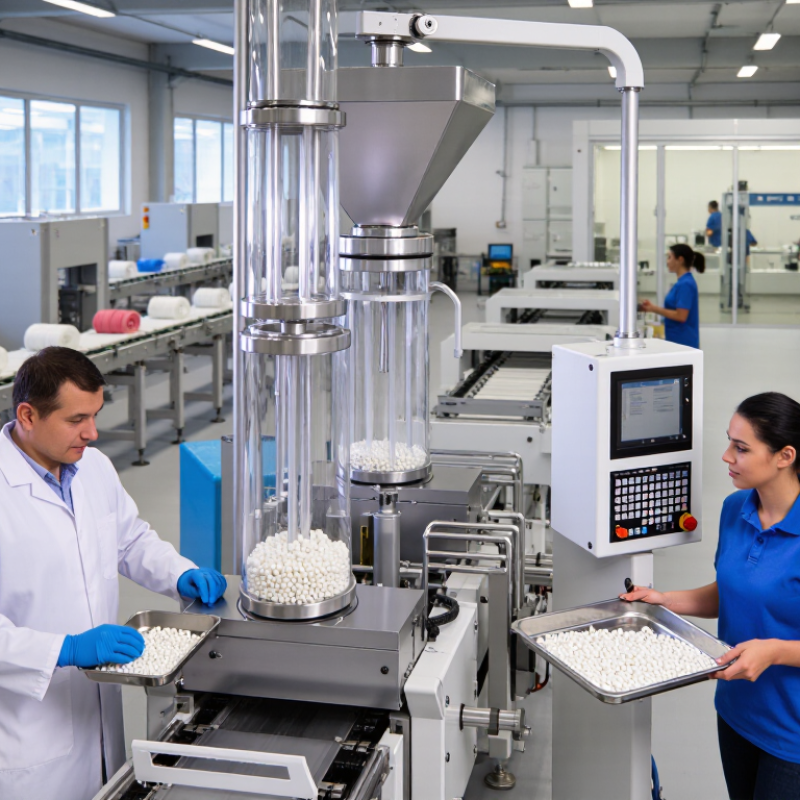
A China PVC compound supplier is a company that formulates, mixes, and supplies ready-to-process PVC pellets. It combines PVC resin with plasticizers, stabilizers, pigments, fillers, and performance additives. The final compound may be flexible, semi-rigid, or rigid. It can serve cable insulation, tubing, seals, flooring, profiles, and molded parts. Unlike a simple raw-material trader, a capable supplier controls formulation, heat history, pellet quality, and batch consistency. Its technical team should understand material chemistry and customers’ processing equipment.
In practical purchasing, the best supplier is not always the lowest-cost factory. Ask for a technical data sheet, certificate of analysis, safety data sheet, and traceable batch information. Check tensile strength, elongation, hardness, density, color stability, and processing temperature against your requirements. Request samples from different batches. A sample may look perfect yet process poorly. Small details matter, especially feeding behavior, odor, surface finish, and die buildup. A reliable supplier explains test methods instead of offering vague promises.
Before approval, run a controlled trial on your own line. Record torque, melt pressure, output, cooling behavior, and finished-part performance. Discuss packaging, lead time, minimum order quantity, and technical support. Ask how formulation changes are communicated and how nonconforming batches are handled. Regional experience can help with export documents and changing compliance expectations, but written evidence still matters. No supplier gets every formulation right on the first trial. Good cooperation leaves room for adjustment, honest feedback, and better data.
Chinese PVC compound suppliers offer formulations for many processing needs, not just one general-purpose grade. Rigid PVC compounds are commonly used for pipes, window profiles, panels, and electrical housings. They provide stiffness, dimensional stability, and smooth extrusion. Flexible compounds suit cables, seals, flooring, tubing, and synthetic leather. Their softness can be adjusted through plasticizer selection and dosage.
Some suppliers also produce flame-retardant, weather-resistant, impact-modified, transparent, and low-temperature compounds. Cable grades may require stable insulation performance and controlled smoke behavior. Outdoor profiles need resistance to sunlight, moisture, and repeated temperature changes. Medical or food-contact applications demand stricter material selection and documentation. Ask for application-specific data, not a generic product sheet.
In practical sourcing, I would request pellets, test samples, and processing guidance before placing a large order. Check hardness, tensile strength, elongation, density, color consistency, and thermal stability. Current compliance documents should match the destination market and the exact formulation. Do not rely on a certificate alone. A batch can still process differently when moisture, extrusion speed, or filler content changes. Suppliers with laboratory records, traceable batch numbers, and clear quality controls are easier to assess. Small trials matter. My own judgment can be wrong without production data.
Choosing the best China PVC compound supplier requires more than comparing prices. In my experience, consistent quality matters most during extrusion. Ask for technical data sheets, safety information, and recent batch records. Check plasticizer content, hardness, color stability, tensile strength, and processing temperature. A reliable supplier should explain testing methods clearly, not hide behind vague claims.
Request production samples before signing a large contract. Run them on your own equipment. Watch the melt flow, surface finish, odor, and pellet consistency. Small differences can cause visible defects in cable coatings, profiles, or molded parts. Confirm whether the supplier can maintain the same formulation across repeated orders. No supplier is perfect. However, a professional team should admit limitations and offer practical corrections.
Tips: Visit the factory when possible. Review mixing equipment, laboratory controls, storage conditions, and packaging. Ask how rejected batches are handled. Check lead times using realistic order volumes, not optimistic promises. Technical support also matters. Can an engineer adjust the compound for your equipment? Ask for traceable test reports and clear product specifications. A cheaper compound may create higher scrap costs later. I have seen this overlooked, and it can damage an otherwise careful purchasing decision. Reliable communication, transparent documents, and stable performance are stronger indicators than attractive quotations.
| Evaluation Dimension | Recommended Reference Benchmark | Evidence to Request | Why It Matters | Weight |
|---|---|---|---|---|
| Material Compliance | Provide a current Safety Data Sheet and compliance documentation for the intended market. For applicable products, verify alignment with REACH Regulation (EC) No. 1907/2006 and RoHS Directive 2011/65/EU, including amendment 2015/863. | Safety Data Sheet, technical data sheet, restricted-substance declaration, and recent third-party test reports. Confirm that the documents identify the tested formulation or material family. | Helps reduce regulatory, customs, and customer-approval risks when the compound is sold in regulated markets. | 20% |
| Technical Specification Control | Each grade should have a documented specification covering relevant properties such as hardness, density, tensile strength, elongation, melt behavior, color, and processing conditions. | Controlled technical data sheet, product specification, revision history, and defined acceptance limits for every critical property. | Clear specifications make it possible to compare suppliers objectively and maintain stable production performance. | 15% |
| Testing and Laboratory Capability | Use recognized test methods suitable for the application. Examples include ASTM D2240 for Shore hardness, ASTM D638 for tensile properties, ASTM D256 for impact resistance, and ISO 527 for tensile testing of plastics. | Laboratory equipment list, calibration certificates, test procedures, sample test reports, and information about internal or independent laboratories. | Reliable testing confirms that delivered material meets the agreed specification rather than relying only on visual inspection. | 15% |
| Batch Consistency and Traceability | Every shipment should be identifiable by batch or lot number, production date, raw-material records, and inspection results. Sampling plans should be documented; ISO 2859-1 may be used for attribute-based sampling. | Example certificate of analysis, batch coding system, retained-sample procedure, incoming-material records, and nonconformance reports with corrective actions. | Traceability allows fast root-cause analysis and supports controlled recalls or corrective actions when a problem occurs. | 15% |
| Application and Processing Support | The supplier should provide grade selection and processing guidance for the intended process, such as injection molding, extrusion, cable coating, flexible tubing, or profile production. | Processing temperature range, recommended equipment settings, drying or storage instructions where applicable, troubleshooting guidance, and technical contact details. | Correct processing support can reduce scrap, shorten trial time, and improve compatibility with existing equipment. | 10% |
| Quality Management System | A documented quality-management system is preferred. ISO 9001 certification can provide evidence of structured process control, but certification should be verified for scope and validity. | Valid certificate, certification scope, latest audit information, quality manual summary, inspection plan, and corrective-action procedure. | A formal system improves consistency in purchasing, production, inspection, document control, and customer complaint handling. | 10% |
| Supply Capacity and Delivery Reliability | Capacity should be demonstrated against the buyer’s forecast, packaging requirements, minimum order quantity, and required delivery schedule rather than stated only as a general monthly figure. | Production capacity statement, capacity allocation plan, lead-time record, packaging specification, inventory policy, and business-continuity plan. | Reliable capacity and delivery planning reduce line stoppages and support stable production scheduling. | 10% |
| Commercial Transparency and Support | Quotations should clearly state grade, formulation scope, color requirements, packaging, minimum order quantity, payment terms, validity period, and applicable Incoterm. | Detailed quotation, sample policy, change-notification procedure, warranty terms, complaint-response process, and communication records during trial orders. | Transparent commercial terms reduce unexpected costs and make supplier performance easier to manage. | 5% |
A reliable China PVC compound supplier should provide clear evidence of quality and compliance. Request a current technical data sheet, safety data sheet, and certificate of analysis for each grade. Check resin type, plasticizer content, hardness, density, tensile strength, and processing temperature. These values should match your application, not only a sales sample.
Verify the supplier’s quality system, such as ISO 9001 certification, and confirm the certificate issuer and validity period. For electrical, construction, or consumer applications, review relevant testing reports and standards. RoHS, REACH, and restricted-substance declarations may be necessary, depending on the destination market. Ask for batch traceability, production records, and retention samples. A certificate alone is not proof. Documents can be outdated.
Tips: Compare test methods, not just test results. Request an independent laboratory check for critical batches. Inspect packaging, labels, and storage conditions during a factory audit. Also review corrective-action records. They reveal how the supplier handles failures. Do not ignore small inconsistencies.
A professional supplier should explain material tolerances and disclose formulation changes before shipment. Confirm whether recycled content, fillers, or stabilizers affect performance. Ask for samples from several production batches. One excellent sample may hide unstable production. No audit is perfect. Still, consistent records, transparent communication, and repeatable test results provide stronger evidence than low pricing alone. Expect some documentation gaps, but require a clear correction plan and a realistic completion date.
Choosing the best China PVC compound supplier starts with your application, not a price list. Rigid profiles, flexible cables, medical components, and automotive seals require different plasticizers, stabilizers, hardness, and flow behavior. Grand View Research valued the global PVC market at approximately USD 45 billion in 2023. This scale increases supplier choice, but it also increases quality differences.
Ask for a formulation trial using your actual equipment and processing temperature. A reliable supplier should provide batch records, a clear certificate of analysis, and test results for hardness, tensile strength, elongation, density, and thermal stability. Request samples from several production lots. One perfect sample proves little. Consistency matters more. Check whether the factory controls weighing, mixing, pelletizing, and moisture protection internally. An on-site audit or independent inspection can reveal details that brochures hide.
Regulatory documentation also deserves careful review. The VinylPlus 2023 Progress Report recorded 810,775 tonnes of PVC recycled in Europe during 2022, highlighting the industry’s growing focus on circular materials. Ask whether recycled content is suitable for your application, and verify its source and performance. Cost savings can become expensive after rejects, odor complaints, or mold adjustments. I would not choose the supplier with the lowest quotation automatically. A supplier may communicate well and still fail during scale-up. Use a written trial plan, define acceptance limits, and review corrective actions before signing a long-term agreement.