10 Essential Tips for Choosing the Right Plastic Granules for Your Project?
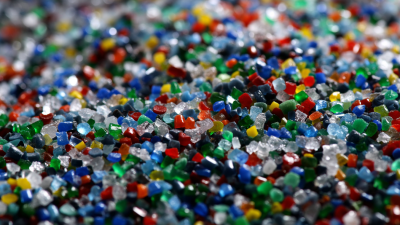
Choosing the right plastic granules for your project can be daunting. Many factors come into play, and understanding them is crucial. These granules differ in types, properties, and applications. Selecting the wrong ones can lead to flawed results.
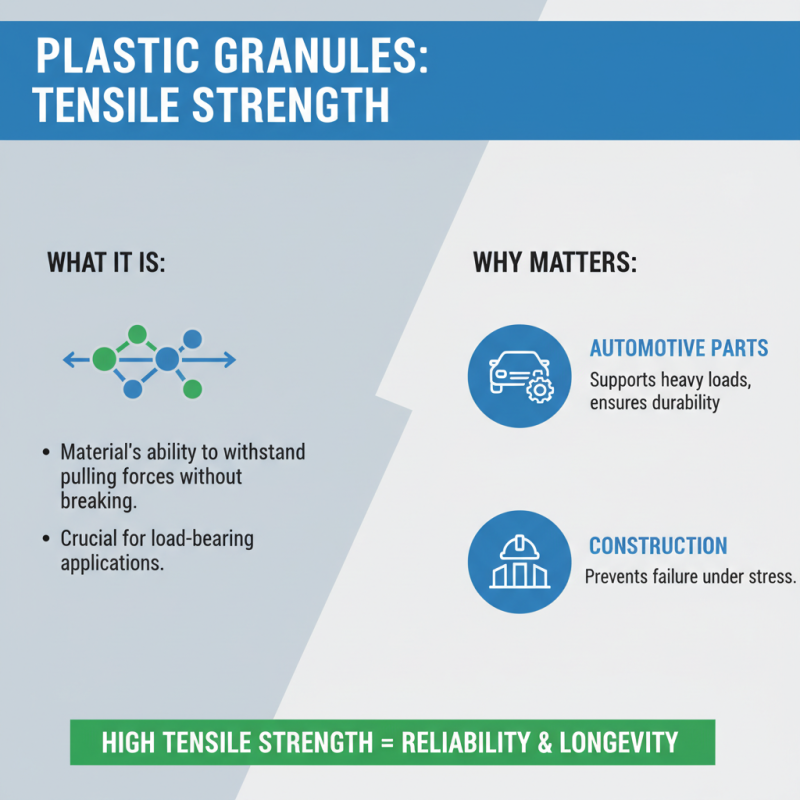
Assess the specific needs of your project. Are you looking for strength, flexibility, or heat resistance? Each type of plastic granule has its unique attributes. Understanding these qualities will help you make informed choices.
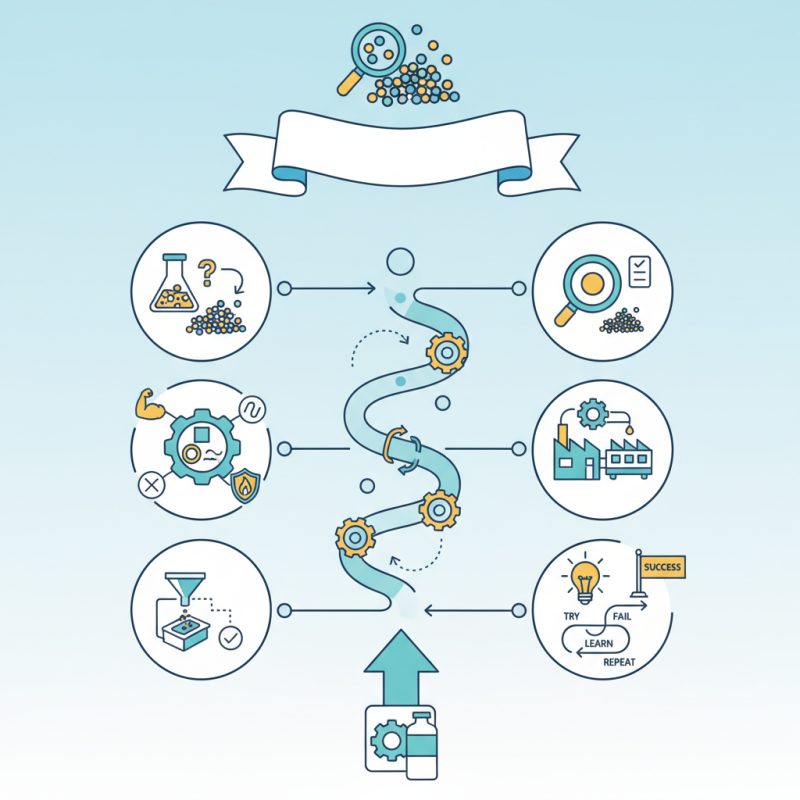
It's common to overlook minor details. Testing small batches before full-scale production can reveal potential issues. Each project is unique; therefore, consider trial and error as part of the process. Making mistakes is part of learning what works best for your needs.
Understanding Plastic Granules: Types and Applications in Manufacturing
When it comes to plastic granules, understanding their types and applications is crucial. Granules are essential in manufacturing various products. They can be categorized into different types, such as polyethylene, polypropylene, and polystyrene. Each type has unique properties, making them suitable for specific uses. For example, polyethylene is resistant to moisture and chemicals. It is often used in packaging materials. On the other hand, polystyrene is rigid and offers excellent dimensional stability, ideal for consumer goods like containers.
Choosing the right granule type can be tricky. Some projects may require a blend of different granules to achieve desired outcomes. However, not all combinations yield the best results. Testing is vital. Sometimes, experimenting with smaller batches before full production reveals hidden flaws. Inadequate testing can lead to costly mistakes. Observing how granules behave under different conditions is fundamental to ensuring quality and performance. Quality specifications should always be considered, as they can differ broadly between types. Overall, navigating the world of plastic granules demands careful thought and experimentation.
Assessing Thermal Properties: Melting Point, Thermal Conductivity, and Stabilizers
When selecting plastic granules for your project, thermal properties are crucial. Melting point plays a significant role. It determines how the material will behave under heat during processing. For instance, a lower melting point can lead to more rapid processing, but it may not withstand high temperatures in final use. Understanding this balance is essential.
Thermal conductivity is another factor to consider. Materials with high thermal conductivity dissipate heat well, making them suitable for applications requiring quick heat transfer. However, this could lead to overheating in some scenarios. Stabilizers also impact thermal properties. They are additives that enhance thermal stability. Selecting the right stabilizer can prolong the material's lifespan and improve performance. It’s a balancing act, as some stabilizers may affect other properties negatively.
Explore your options, but expect imperfections. Choosing the right granules involves trial and error. Some granules might not perform as expected, leading to project delays. Testing samples beforehand may help. However, results can vary. Be prepared for adjustments along the way. Understanding these thermal aspects can significantly influence your project's success.
Sustainability Considerations: Biodegradable Alternatives and Recycling Rates
Choosing the right plastic granules for projects demands serious thought, especially regarding sustainability. Biodegradable alternatives have gained traction. In 2020, the global market for biodegradable plastics reached $4.6 billion. This segment is expected to grow at a compound annual growth rate of 18.86% through 2027. Despite this potential, adoption rates still lag in many industries.
Recycling rates for traditional plastics remain a pressing concern. In the U.S., only 8.7% of plastics were recycled in 2019. This statistic highlights the need for improvement. Relying solely on recycling systems can lead to disappointment. Many biodegradable options aim to address this gap but come with challenges. Often, they require specific conditions to break down effectively, which are not always available.
The balance between quality and sustainability is complex. Some biodegradable granules might not perform as well as traditional options. Moreover, the economic implications are noteworthy. Higher costs can deter manufacturers from making the switch. While innovation is promising, the industry must consider consumer education. A shift in mindset is necessary to embrace sustainable materials fully.
10 Essential Tips for Choosing the Right Plastic Granules for Your Project
| Tip |
Material Type |
Biodegradable |
Recycling Rate (%) |
Suitable Applications |
| 1. Analyze Project Requirements |
Polyethylene (PE) |
No |
30 |
Packaging, Bottles |
| 2. Consider Environmental Impact |
Polylactic Acid (PLA) |
Yes |
22 |
Food Containers, Disposable Tableware |
| 3. Evaluate Physical Properties |
Polypropylene (PP) |
No |
50 |
Automotive Parts, Textiles |
| 4. Check for Certifications |
Polyethylene Terephthalate (PET) |
No |
52 |
Beverage Containers, Clothing |
| 5. Assess Availability and Cost |
ABS (Acrylonitrile Butadiene Styrene) |
No |
25 |
Consumer Goods, Toys |
| 6. Match with End-Use Requirements |
Bio-Based Polyethylene (Bio-PE) |
Yes |
35 |
Packaging, Rigid Containers |
| 7. Focus on Long-term Durability |
PVC (Polyvinyl Chloride) |
No |
45 |
Pipes, Window Frames |
| 8. Investigate Supply Chain Transparency |
TPE (Thermoplastic Elastomer) |
No |
40 |
Grip Handles, Seals |
| 9. Test for Compatibility with Other Materials |
Melamine Formaldehyde |
No |
30 |
Dishware, Laminates |
| 10. Plan for End-of-Life Options |
Recycled PET (rPET) |
No |
95 |
Fabric, New Bottles |
Economic Factors: Cost Analysis and Supply Chain Impacts on Material Selection
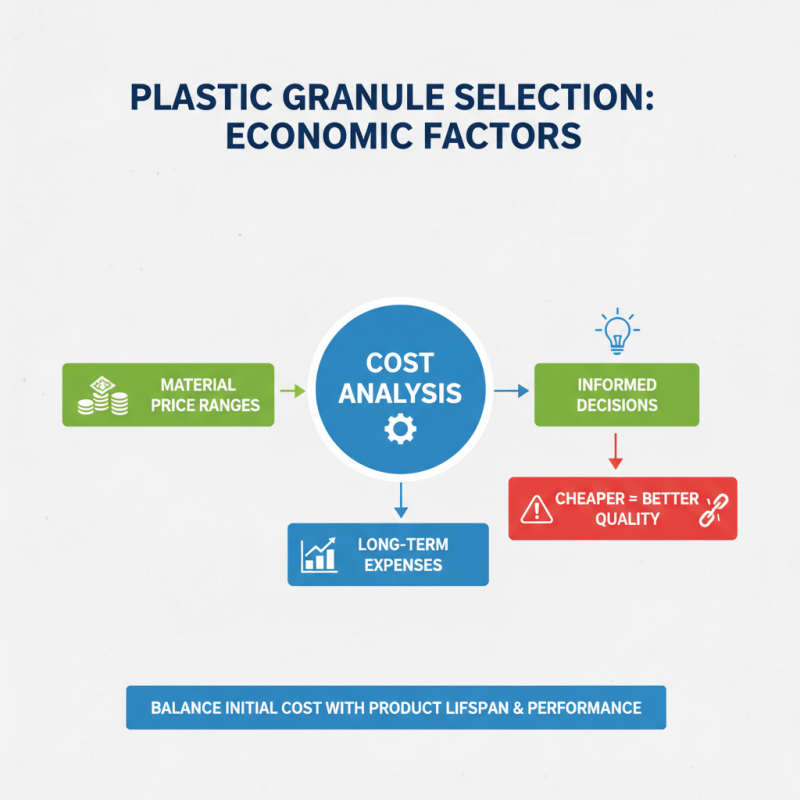
When selecting plastic granules for a project, economic factors play a critical role. Analyzing costs helps in making informed decisions. Various types of plastic granules have different price ranges. The most cost-effective choice might not always be the best option. Sometimes, cheaper materials compromise quality. This could lead to higher expenses in the long run.
Supply chain impacts can further complicate material selection. Fluctuations in availability may cause delays. These disruptions can increase project costs. It's important to consider local suppliers. They often have more reliable delivery schedules. However, they may not always offer the lowest prices. Evaluating trade-offs is essential.
Another aspect is the potential for waste. Using lower-quality granules may result in more scrap material. This is a significant concern for budget-conscious projects. A thorough understanding of material properties is necessary. It helps in minimizing waste. Ultimately, the selection process should balance cost, quality, and supply reliability. Careful consideration can lead to more sustainable and economical choices.