How to Choose the Right Injection Tooling for Your Manufacturing Needs?
Choosing the right injection tooling is crucial for any manufacturing process. It affects production efficiency, product quality, and cost. With a variety of tooling options available, making the right choice can be challenging. Manufacturers must consider their specific needs and the intricacies of their projects.
Injection tooling decisions depend on factors like material type, part design, and production volume. It's not just about selecting a tool; it's about aligning it with business goals. A wrong choice can lead to wasted resources and delays. Many businesses face this dilemma, often overlooking essential details in their selection process.
Understanding the basics of injection tooling can prevent common pitfalls. For example, an improperly sized tool may create defects in the final product. Therefore, taking time to analyze requirements is essential. In an evolving industry, constant reflection on tooling decisions will keep manufacturers competitive. Balancing quality, efficiency, and cost is key to success in manufacturing.
Factors to Consider When Selecting Injection Tooling for Manufacturing
Choosing the right injection tooling for manufacturing can be a daunting task. Several factors should be carefully considered. The material you plan to use is crucial. Different materials require unique tool designs. Consider the durability of the tooling as well. Some tools can wear out quickly, impacting production.
When selecting injection tooling, think about the complexity of your part designs. Simpler designs may require less intricate tooling. However, complex products often need advanced tooling, which can elevate costs. Understand your manufacturing capabilities as well. Investing in sophisticated tools without proper equipment can lead to inefficiencies.
Tips: Start by outlining your production goals. This clarity can guide your tooling choices. Always focus on the cost versus performance ratio. A cheaper tool may save money initially but could lead to higher long-term expenses. Lastly, assess the potential for scalability. Your current needs may grow, so choose tools that can adapt to future requirements.
Types of Injection Tooling Available for Different Applications
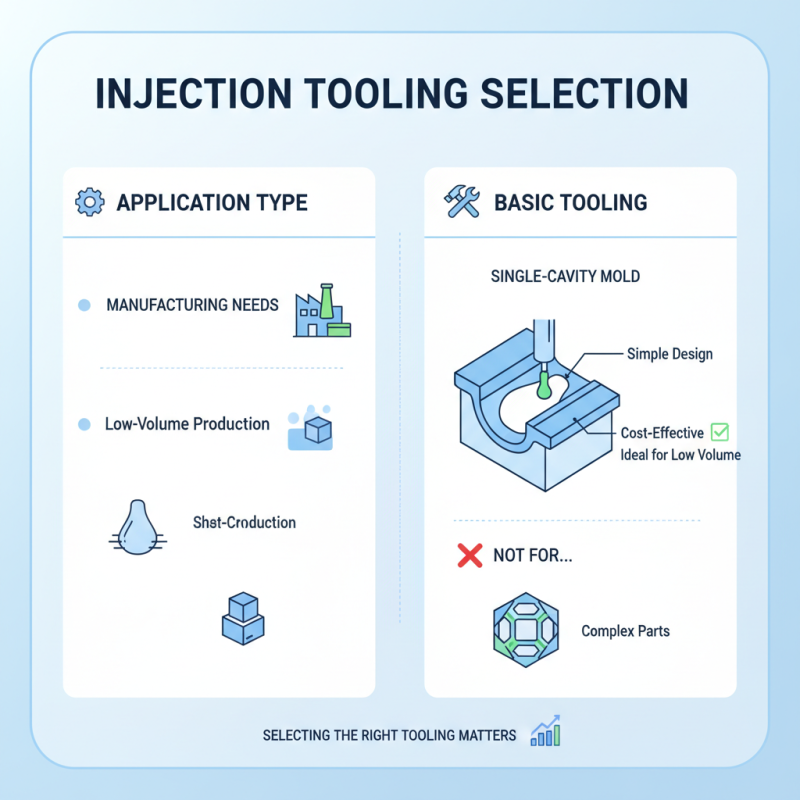
When selecting injection tooling, consider the application type. Each type serves different manufacturing needs. Basic tooling includes single-cavity molds. These molds are simple and cost-effective. They work well for low-volume production. However, they might not be ideal for complex parts.
Multi-cavity molds are another option. They allow for producing several parts simultaneously, improving efficiency. Yet, they require higher initial investment and design complexity. Balanced design is crucial to avoid costly mistakes. Hot runner systems offer a way to reduce waste. They maintain melt temperature and minimize cycle times. But, this technology can lead to greater maintenance needs.
Considering custom tooling might be necessary for specialized applications. These tools provide tailored solutions but come with a higher risk. Projects can exceed budgets and timelines. It's essential to evaluate all options thoroughly. Each decision impacts production quality and costs. A well-considered approach can lead to better outcomes. Missteps can be educational, though, leading to improved processes in the future.
Understanding Material Compatibility in Injection Tooling Selection
Choosing the right injection tooling requires a deep understanding of material compatibility. Different materials have unique properties. For instance, thermoplastics can offer flexibility, while thermosets provide rigidity. Selecting the wrong combination can lead to product failures. In fact, studies show that up to 30% of injection molding defects arise from material-tooling mismatches.
When choosing tooling, consider the thermal properties of the material. High-temperature materials might require specialized tooling. Also, the resin's viscosity affects the flow behavior during injection. An inappropriate tooling design can result in poor mold filling. Always evaluate how the chosen material influences the tooling design.
Tips: Always conduct compatibility tests. Get feedback from production teams. Regularly review material options to stay updated with industry innovations. Documentation of previous projects can also provide valuable insights. Remember, even minor details can significantly impact the final product quality.
Evaluating Cost vs. Performance in Injection Tooling Decisions
When selecting injection tooling for manufacturing, evaluating cost versus performance is crucial. Many manufacturers face tight margins. According to a recent industry report, tooling costs can account for up to 50% of the total production expenses. Choosing the right tooling can make a significant difference in profitability.
Performance matters as much as cost. High-quality tools improve production efficiency and reduce waste. However, they often come with a higher initial price. For instance, a reliable tool might reduce cycle times significantly. This can lead to a faster return on investment. It's essential to assess the trade-offs between upfront costs and the long-term benefits of higher performance.
Tips: Always consider the total lifecycle cost of tooling. Look for tools that provide longevity. It can also be beneficial to involve engineering teams in the decision. They can offer insights into functional requirements. Reflect on past projects where tooling choices impacted overall efficiency. Evaluate those decisions carefully to inform future practices.
Maintenance and Longevity: Key Aspects of Injection Tooling Selection
Selecting the right injection tooling is crucial for manufacturing success. The maintenance and longevity of these tools directly impact production efficiency. According to a recent industry report from the Association for Manufacturing Excellence, up to 25% of tool maintenance costs can be attributed to poor initial selection. Choosing high-quality materials can lead to longer tool life and reduced downtime.
Regular maintenance is often overlooked. Many companies do not conduct routine inspections. A lack of preventive care can lead to significant issues, such as wear and tear, which affects part quality. Implementing a maintenance schedule can extend tool lifespan significantly. Industries report that effectively maintained tools can last 30% longer than those neglected. This highlights the importance of selecting tools that are easy to service or repair.
Material choices greatly affect longevity. Steel, for example, can provide durability but may require specific treatments for optimal performance. Companies often mistakenly prioritize cost over quality, leading to regrettable trade-offs. Balancing initial investment with long-term maintenance costs is essential. The right selection supports sustainability and reduces waste. Taking these factors into account is vital for any manufacturer aiming for efficiency in production.